There’s nothing quite as frustrating as turning your back for a moment while boiling noodles, only to return to a starchy tsunami erupting from your pot. Pasta overflow is a common kitchen nuisance, but an age-old trick involving a drizzle of cooking oil might just be the solution you’ve been overlooking. This simple yet effective method leverages the science of surface tension to keep your stovetop clean and your noodles perfectly cooked.
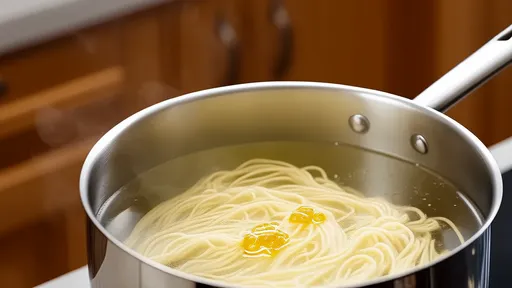
When water reaches its boiling point, bubbles of steam rise rapidly to the surface, carrying dissolved starch from the pasta. These bubbles create a foam that can quickly expand beyond the pot’s capacity. However, adding a small amount of oil—typically just a teaspoon—alters the behavior of these bubbles. The oil forms a thin, hydrophobic layer on the water’s surface, breaking the surface tension that allows foam to accumulate. As a result, bubbles collapse before they can build up into an overflow.
Why does this work? At a molecular level, water molecules are highly cohesive, meaning they stick together tightly. This cohesion creates surface tension, which is why bubbles can form stable structures. Oil, being hydrophobic, disrupts this cohesion. When oil is introduced, it spreads across the surface, creating a barrier that prevents bubbles from merging into larger foam formations. This principle isn’t just limited to cooking; industrial processes often use similar "defoaming" agents to control foam in chemical reactions.
Beyond preventing spills, the oil method offers subtle benefits for your pasta. Some chefs argue that the oil coating reduces stickiness by creating a slight barrier between noodles, though this is debated. What’s undeniable is that it minimizes the need for constant stirring or lowering the heat—a welcome reprieve for multitasking cooks. Olive oil is a popular choice for its mild flavor, but any neutral oil like vegetable or canola will suffice.
A word of caution: While effective, this trick isn’t foolproof. Excessively starchy water (common with fresh pasta) or an undersized pot may still foam over. For best results, use a pot with ample headroom and consider combining the oil with other anti-foam tactics, like placing a wooden spoon across the rim—another kitchen hack rooted in science (wood’s porous surface breaks bubbles on contact).
Critics of the oil method point out that it can create a slick surface that prevents sauces from adhering to pasta later. To avoid this, drain noodles thoroughly and rinse lightly if needed. Alternatively, reserve some pasta water before adding oil—its starch content helps sauces cling while the oil controls foam during cooking. This balanced approach marries tradition with practicality.
Interestingly, cultures worldwide have developed their own variations of this technique. In Japan, a drop of sesame oil is sometimes used when cooking udon, while Italian nonnas might employ a splash of olive oil not just for flavor but as a spill deterrent. These regional adaptations highlight how a universal kitchen challenge inspired localized solutions.
For those seeking alternatives, modern gadgets like foam-controlling lids or specialized pots with spill-proof rims exist, but they lack the simplicity and accessibility of the oil trick. In professional kitchens, where time and space are at a premium, many chefs still rely on this low-tech solution. Its reliability has cemented its place in culinary lore, proving that sometimes the best tools are already in your pantry.
Next time you’re preparing spaghetti or ramen, try the oil method. Observe how the shimmering film tames the chaos beneath—a tiny intervention with outsized impact. It’s a reminder that cooking, at its heart, is about working with nature’s laws rather than against them. And if nothing else, you’ll save yourself the scrubbing.
By /Jul 31, 2025
By /Jul 31, 2025

By /Jul 31, 2025

By /Jul 31, 2025
By /Jul 31, 2025

By /Jul 31, 2025
By /Jul 31, 2025
By /Jul 31, 2025
By /Jul 31, 2025
By /Jul 31, 2025
By /Jul 31, 2025
By /Jul 31, 2025
By /Jul 31, 2025
By /Jul 31, 2025
By /Jul 31, 2025
By /Jul 31, 2025
By /Jul 31, 2025

By /Jul 31, 2025
By /Jul 31, 2025
By /Jul 31, 2025
