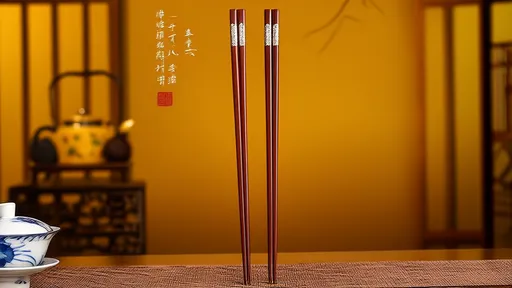
The humble chopstick, an eating utensil used by billions across Asia, holds subtle design secrets that intertwine anthropology, physiology, and ancient wisdom. Among these, the standard length of 7.6 Chinese inches (about 23 cm) reveals particularly fascinating insights into human ergonomics. This measurement isn’t arbitrary—it’s a cultural artifact refined over millennia to harmonize with our physical and psychological dimensions.
The Magic of 7.6 Inches
Traditional Chinese chopsticks adhere to a classic proportion: seven cun (inches) and six fen (tenths). This converts roughly to 23 centimeters—a length that balances control, reach, and comfort. But why this specific dimension? The answer lies in the interplay between hand anatomy and dining etiquette. At this length, the chopsticks extend just beyond the width of an average adult’s palm when held near their midpoint, allowing the fingers to pivot naturally without strain. The 7.6-inch benchmark also prevents fingertips from dipping into food while reaching across communal dishes, a practical solution to both hygiene and social grace.
Deeper still, this measurement reflects ancient Chinese philosophies about human nature. The seven units symbolize the “Seven Emotions” (joy, anger, sorrow, fear, love, hate, desire) from Confucian thought, while the six tenths represent the “Six Senses” (sight, sound, smell, taste, touch, and intention). Together, they serve as a reminder that eating transcends mere sustenance—it’s an exercise in temperance and mindfulness. The chopstick becomes a tool to mediate between our primal instincts and cultivated manners.
Ergonomics in the Hand
Modern studies in ergonomics validate what Chinese craftsmen intuited centuries ago. Research on grip strength and dexterity shows that objects between 20-25 cm long optimize precision tasks requiring pincer movements—exactly what chopsticks demand. Longer sticks would force wider finger spans, increasing muscle fatigue; shorter ones would reduce leverage, making food harder to grasp. The 23 cm sweet spot allows the thumb’s thenar eminence (the fleshy base) to act as a fulcrum, while the index and middle fingers generate controlled pressure.
Interestingly, this length also adapts to varied hand sizes. Children’s chopsticks are shorter (often 5-6 cun), scaling up as their hands grow. Regional variations exist too: Japanese hashi tend to be slightly shorter (21 cm) for refined, bite-sized cuisine, while Korean metal jeotgarak stretch to 25 cm for grilling meats. Yet all stay within a tight range that respects the same biomechanical principles.
Beyond Function: The Cultural Weight
Chopstick length isn’t merely about practicality—it carries symbolic heft. In imperial China, longer sticks (up to 9.5 cun) denoted aristocracy, as elites dined from elevated tables requiring extra reach. Commoners used shorter versions for low-set meals. The standardized 7.6-inch length later emerged as a democratic middle ground, reflecting Confucian ideals of harmony and moderation. Even the name “筷子” (kuàizi) phonetically hints at “quick sons,” a pun celebrating the utensil’s role in family meals where generations share dishes.
Today, as global diners adopt chopsticks, the 7.6-inch rule persists not by dogma but by silent consensus—proof that the best designs endure when they align with our bodies and souls. Whether picking up a grain of rice or a slippery dumpling, these unassuming sticks remind us that technology, at its core, should feel like an extension of ourselves.
By /Jul 31, 2025
By /Jul 31, 2025

By /Jul 31, 2025
By /Jul 31, 2025
By /Jul 31, 2025

By /Jul 31, 2025
By /Jul 31, 2025
By /Jul 31, 2025
By /Jul 31, 2025
By /Jul 31, 2025
By /Jul 31, 2025
By /Jul 31, 2025
By /Jul 31, 2025

By /Jul 31, 2025
By /Jul 31, 2025
By /Jul 31, 2025

By /Jul 31, 2025

By /Jul 31, 2025
By /Jul 31, 2025
By /Jul 31, 2025
