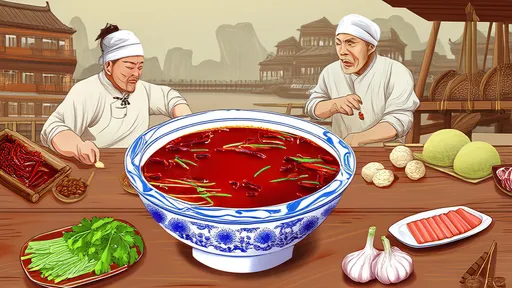
The bustling docks of Chongqing in the late 19th century were a world of sweat, steam, and sizzling metal. Amid the cacophony of laborers hauling goods and the hiss of riverboats, an unassuming culinary innovation quietly took root—one that would forever change how the world eats hot pot. The oil dip, or youdie, began as a pragmatic solution to scalding mouths but evolved into a cultural touchstone, a testament to the ingenuity of working-class food culture.
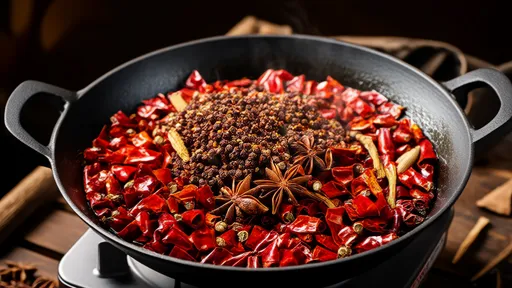
Chongqing’s dockworkers, known as bangbang jun (stick men), relied on cheap, fiery hot pot to fuel their backbreaking labor. The broth, bubbling with Sichuan peppercorns and chili-laden cow fat, was unforgiving—a single careless bite could leave tongues numb and throats raw. Yet time was a luxury these men didn’t have. Their solution? A swift dunk of blistering meat into bowls of cool sesame oil. This wasn’t just about temperature control; the oil formed a protective layer on the tongue, dialing down the chili burn while amplifying the meat’s richness. Word spread through the foggy riverbanks, and soon, every hot pot stall offered tiny dishes of golden oil alongside garlic and cilantro.
By the 1930s, the oil dip had transcended its humble origins. Teahouses and restaurants adopted the practice, but with a twist—they began blending sesame oil with peanut paste, fermented soybeans, and even crushed nuts. Each establishment guarded its recipe fiercely, turning what was once a functional trick into a signature flavor. The dip became a canvas for regional identity: Chengdu versions leaned toward sweetness with added sugar, while Chongqing’s stayed austere, letting the heat of the pot take center stage. Migrants carried the tradition to Shanghai and Beijing, where locals initially scoffed at the "greasy" condiment—until they tried it.
The Cultural Revolution nearly erased the oil dip from history. Condiments were deemed bourgeois excess, and hot pot was simplified to communal broth with scant accompaniments. But like many culinary rebels, the practice survived underground. Older chefs whispered recipes to apprentices, and families kept jars of blended oil hidden for private meals. When China reopened to economic reform in the 1980s, the oil dip reemerged with vengeance—now marketed as an "ancient Chongqing secret" to tourists. Supermarkets began selling pre-mixed bottles, complete with celebrity endorsements.
Modern food science has since unpacked why the oil dip works so well. Researchers at Sichuan University found that sesame oil’s lipid molecules bind to capsaicin faster than water or alcohol, stripping heat from the tongue. Meanwhile, the fat acts as a flavor carrier, ensuring each bite of meat delivers maximum umami. This synergy between folk wisdom and biochemistry explains why even as hot pot globalizes—from Manhattan to Melbourne—the oil dip remains non-negotiable. Chefs now experiment with truffle-infused oils or chili-laced variants, but the soul of the condiment stays true to those 19th-century dockworkers.
Today, the oil dip is more than a condiment; it’s a narrative of resilience. From preventing burns on Chongqing’s docks to gracing Michelin-starred tasting menus, its journey mirrors China’s own transformation. The next time you see a diner swirling thinly sliced lamb in that glossy golden pool, remember: you’re witnessing a centuries-old dialogue between necessity and pleasure, one delicious dip at a time.
By /Jul 31, 2025
By /Jul 31, 2025

By /Jul 31, 2025
By /Jul 31, 2025
By /Jul 31, 2025

By /Jul 31, 2025
By /Jul 31, 2025
By /Jul 31, 2025
By /Jul 31, 2025
By /Jul 31, 2025
By /Jul 31, 2025
By /Jul 31, 2025
By /Jul 31, 2025
By /Jul 31, 2025
By /Jul 31, 2025
By /Jul 31, 2025
By /Jul 31, 2025
By /Jul 31, 2025
By /Jul 31, 2025
By /Jul 31, 2025